
Think you don’t have enough research experience to apply to graduate school? You might be wrong!
Hi! I’m Leah.
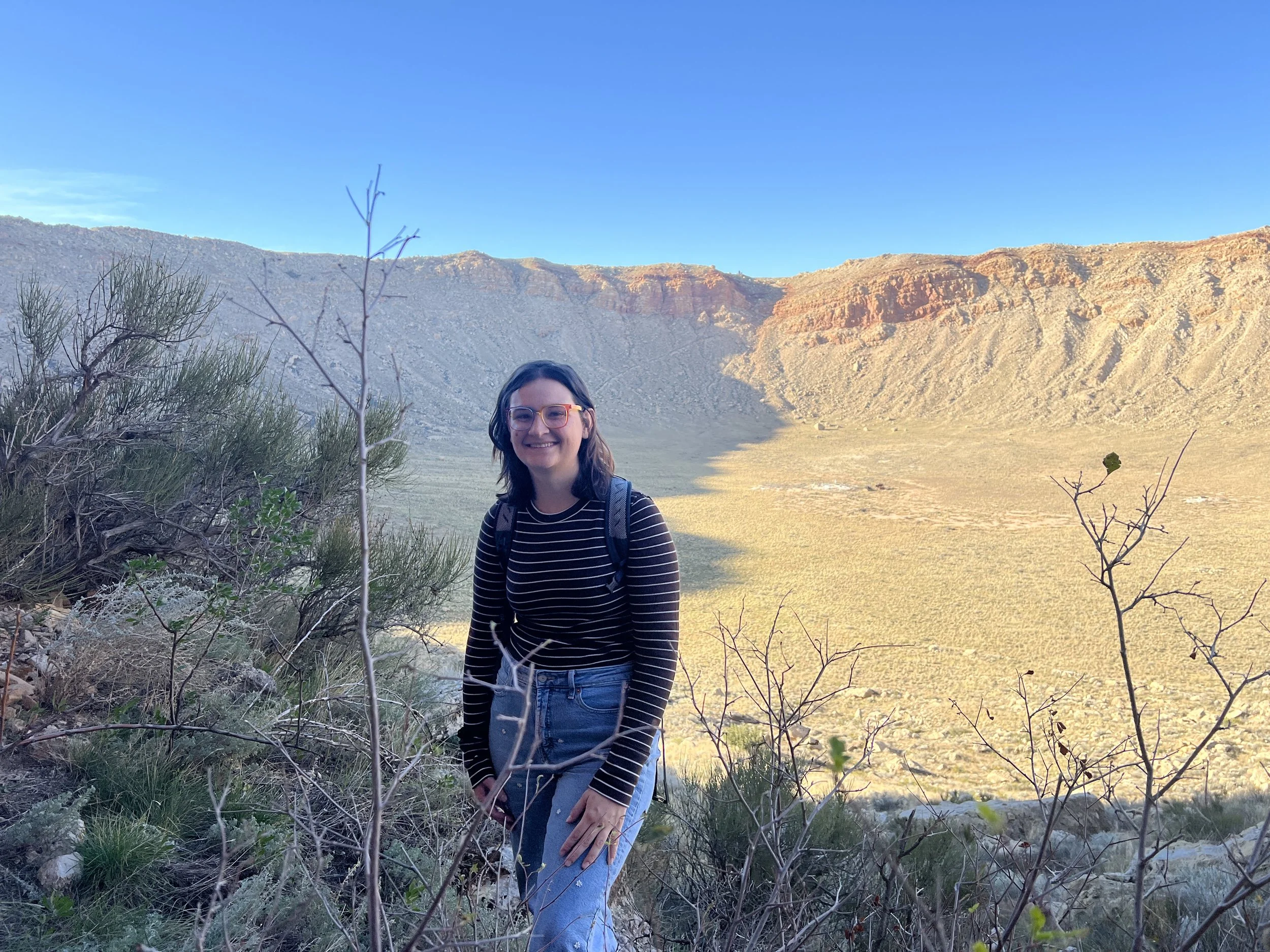
I’m part of the GEMS steering committee, but I’ve also been a GEMS mentor for the past few years. Most of my mentees have said something like this during a meeting:
“I don’t really have any research experience. I mean, I have done some research, but I didn’t contribute that much”
Or
“I didn’t know I wanted to go to grad school until my senior year, so I don’t have any research experience. I’m not sure whether I should apply this cycle”
Or even
“I don’t have any papers so I don’t think I’ll get in”
I personally fit into the first and third categories when I applied to graduate school. I thought my research experience was too limited to “count.” I was wrong!
It’s very common for students to be in a situation where they feel they don’t have enough research experience compared to some “ideal applicant.” While it is true that some successful applicants have years of research experience, publications, have presented at conferences, and have been awarded fellowships, that is definitely not the case for everyone and not even the majority.
There isn’t a minimum amount of research experience that’s required to get into graduate school!
Graduate school is intended to train students to be scientists. If you already knew how to independently design a research project, collect and analyze data, write papers, present at conferences, and obtain funding, you probably wouldn’t need grad school in the first place. Graduate school is where you learn many of these skills. When framing undergraduate research, you need to consider what graduate admissions committees and faculty members expect from students at your level. Advisors look for students who have the potential to become successful researchers. Research experience is one way to demonstrate that potential, but it isn’t the only way.
Imagine you’re a professor studying meteorites. One applicant has two years of experience classifying meteorites. But they can’t explain why they want to work with you, and their research advisor wrote them a lukewarm letter of recommendation. Another student has one summer of volcanology research experience and wants to study oxygen isotopes in L-chondrites for graduate school because they heard about them in the cosmochemistry class they took their junior spring. They’ve read your papers, they ask thoughtful questions when you meet with them, and they can clearly explain why your lab is the perfect place to pursue their interests. Who would you pick?
“I don’t have any research experience”
First, ask yourself whether you truly have no research experience.
Did you do a project in an upper division course like field geology, structural geology, or GIS? Did you do an independent study with a literature review? What about a capstone? Consider whether you’ve ever asked a scientific question, collected or analyzed data, and communicated your results. Those experiences might not have been called Research, but they can still demonstrate many of the skills prospective advisors look for.
If you genuinely have little or no research experience, that’s ok too! Admissions committees and prospective advisors understand that different students come from different backgrounds with different opportunities. Many students don’t decide to major in geology until after they’ve started college. It’s common for students to learn about graduate school late in their degrees or after graduation. Some students have to work during the semesters and summers and not all schools have paid research opportunities available. And not every department has a lot of research going on!
What matters most is not whether you had formal research experience, but whether you can show that you are prepared for research. In your application, you can clearly describe the scientific skills you do have - data analysis, field methods, coding, lab experience in courses, and writing scientific reports all count. Talk about what you learned from those experiences. You can also describe “transferable skills” that you may have from your job, volunteering, sport, or other experiences. Have you ever seen a long project through from start to finish? Do you have experience managing a rigorous schedule? What about completing multiple group projects in a single semester and working in a team? Your statement of purpose will be a place to demonstrate your curiosity and interests: describe the kinds of scientific questions that interest you, how those interests developed, and how graduate school is the next step toward exploring them. Strong letters of recommendation can also help fill in gaps by speaking to your work ethic, problem-solving abilities, and potential to succeed in research.
If you still have time before applications are due, it is also totally worth reaching out to faculty to ask whether you can get involved in research somehow. Even a semester of research can be valuable. You might say, “I don’t know, that seems like a stretch Leah…”. Last year, a senior began a research project in our group the same semester she applied to graduate school, and she got into her top choice program with an assistantship!
If applications are approaching fast, don’t talk yourself out of applying. Talk with mentors who understand your situation, post in the Discord server for advice, and do your best with your applications. The worst outcome is that you don’t get in and now you have materials to revise for next time you apply. You may be more competitive than you realize.
“I have done research, but I didn’t really contribute much”
This is probably the most common thought shared between grad school applicants.
Research is almost always a team effort. As an undergraduate researcher, your role in research is usually to learn how research works, not to envision and carry out a project that leads to a paper. A lot of undergraduate research experiences look like this: preparing samples, collecting field data, editing code, or running other people’s samples. Maybe you ran a few simulations as part of a larger project a postdoc was working on. Maybe you did a senior thesis that ended up with one usable data point (me). Sometimes a small project is handed to you where you simply characterize or categorize samples but you don’t make big picture interpretations. Your experience still helps you learn how research is done, no matter how big or small it felt.
Instead of focusing on how large your contribution was, think about what you learned. Did you become more comfortable reading papers? Do you know how to do a literature review now? Did you learn a new analytical technique and what types of samples and projects it can be used for? Those are exactly the kinds of experiences advisors value from prospective students.
Just as importantly, remember that you also get to frame this experience when you talk with prospective advisors and when you write your statement of purpose. Just to be clear, I am not suggesting that you lie or exaggerate your experience. But you can and should actively explain what your experiences meant for your development as a scientist. Directly state what you got out of your research experience, what you learned, and how it will help you become a scientist during graduate school. Develop your “elevator pitch” before meeting with prospective advisors. Tell your prospective advisor and the admissions committee exactly how your experience helped you realize you need graduate school to achieve your professional goals, and how you know their program is the right one for you. Highlight the skills you gained, the questions you learned to ask, and how your experience led you to an interest in the work you’d be doing in grad school.
“I have research experience, but it doesn’t seem as impressive as everyone else’s”
There will always be someone out there with more research experience than you. That doesn’t mean they’re a stronger applicant than you.
Faculty look for students who are a “good fit” for their research group, communicate well, demonstrate curiosity, have strong letters of recommendation, and are legitimately enthusiastic about the research they want to pursue. They don’t simply admit the applicant with the most experience.
Graduate admissions aren’t a battle of the CVs!
Focus on finding the best fit for you, pitching your experience in a targeted way for each prospective advisor, and demonstrating that you’d make a great researcher. Remember that advisors aren’t just choosing students. You’re also choosing an advisor. The goal is not to simply get accepted, but rather to get accepted to a research group where you’ll be supported, challenged, and excited to spend the next few years. And remember, it doesn’t ~actually~ matter if you get into every place you apply, because in the end you can only choose one program.
So… what do admissions committees actually care about?
Most advisors ask themselves questions like…
Can this student succeed in graduate-level coursework?
Are they genuinely excited about my research?
Have they shown that they can learn new scientific skills?
Do their letters suggest they’ll be a good researcher and colleague? (Remember: graduate students are often viewed more as “future colleagues” and less like students)
Will they fit well in my research group?
Can I picture interacting with and mentoring this student for the next few years?
They definitely care about research, but you’ll notice in the list above, there is so much more that prospective advisors consider when looking for students.
The biggest barrier to getting into grad school isn’t usually research experience, it’s talking yourself out of applying
Don’t self-select out of the applicant pool because you don’t think you’ll get in. Let an admissions committee evaluate your application. If you’re interested in graduate school, take advantage of whatever opportunities are available to you (your mentor, the Discord, resources on the GEMS website). Put together the strongest application you can, get lots of feedback on it from lots of people, and go for it. You got this!